Patient communication is one of the most important pieces of surgical readiness—yet it’s often one of the hardest workflows to manage consistently. Between clinical demands, staffing constraints, and growing patient expectations, many organizations struggle to gather complete information before surgery while also ensuring patients feel informed and prepared.
The challenge is not a lack of effort. It’s that traditional pre-surgical communication relies heavily on manual steps: repeated phone calls, paper packets, voicemail, missed connections, and last-minute scrambling for details that should have been collected days earlier.
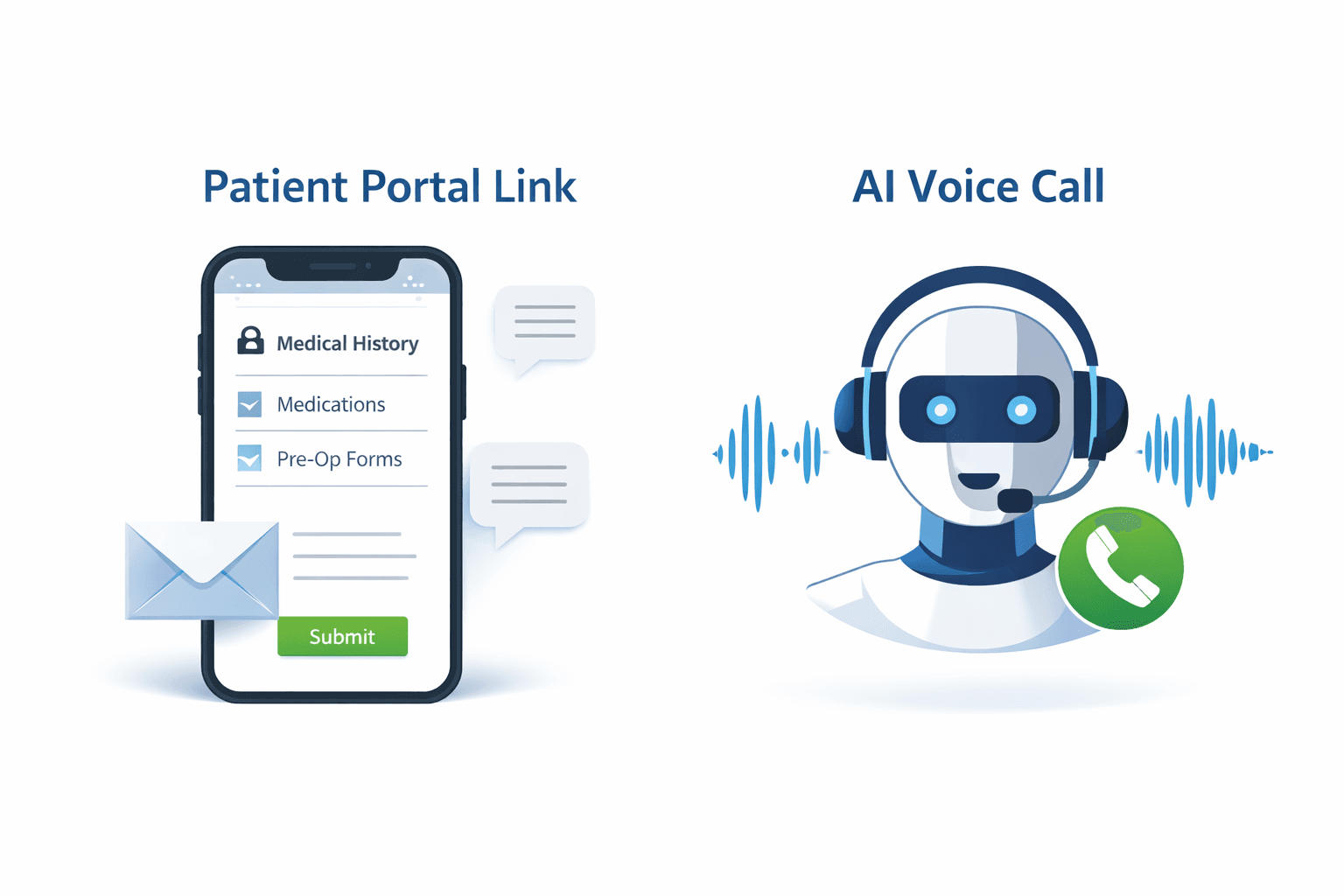
That’s why more healthcare organizations are adopting AI-enabled patient communication models that combine two key approaches:
A text message link to a secure portal experience, where patients can conveniently enter their information
An AI voice agent that calls patients directly, guiding them through the same intake process over the phone
This approach respects patient preferences while improving completeness, consistency, and operational efficiency.
The Pre-Surgery Communication Problem
Before surgery, teams need patients to provide accurate information—often including medical history, medication lists, and other critical details that support planning and safety. At the same time, patients need reassurance and clarity about what to expect.
But in many environments, this process breaks down because it depends on time-consuming outreach and back-and-forth follow-up. Common issues include:
Incomplete medical history documentation
Missing or inaccurate medication lists
Patients unsure what to expect or when to arrive
Repeated phone tag between staff and patients
Late discoveries that cause schedule disruption
When these gaps show up on the day of surgery, they create stress for the care team and the patient—and can impact efficiency, experience, and outcomes.
A Text-Delivered Portal Experience Patients Can Complete on Their Own Time
For many patients, the best experience is one they can complete independently. A text message with a simple portal link allows patients to enter key information in a familiar, accessible format—without needing to coordinate a phone call during business hours.
This portal-style intake experience can support patients in completing:
Medical history and relevant health information
Medication lists and other pertinent details
Required pre-surgical questions and confirmations
High-level reminders and key next steps
The advantage is convenience. Patients can do it from their phone, at their own pace, and with less pressure than a live call. It also helps reduce paperwork and creates a more streamlined experience for both the patient and the care team.
Instead of relying on staff to manually chase down missing information, patients are empowered to participate in their own readiness process.
An AI Voice Agent for Patients Who Prefer a Call
Not every patient wants a portal-based experience. Some patients are more comfortable speaking to someone over the phone, especially when they have multiple medications, complex history, or simply prefer verbal communication.
This is where an AI voice agent adds tremendous value.
Rather than requiring staff to make dozens of outreach calls, the AI voice agent can proactively contact patients and guide them through a structured intake conversation to collect:
Medical history
Medication list
Other pertinent pre-surgical information needed for readiness
Because the call is guided and consistent, the experience is reliable and thorough. Patients receive clear prompts, and the process supports completeness without the variability that often occurs with manual workflows.
It’s a patient-centered way to capture critical information while reducing administrative friction.
The Result: Better Readiness, Better Experience, Less Operational Strain
When digital portal intake and AI voice outreach work together, healthcare organizations gain flexibility while staying consistent. Patients can choose the experience that works best for them, and teams gain a clearer, more complete picture before the surgical date.
This approach can help reduce last-minute surprises, improve preparedness, and create a smoother experience across the entire surgical journey—without adding to staff workload.
In the end, patient communication isn’t just about reminders or forms. It’s about building confidence, collecting the right information at the right time, and setting the stage for safe, successful care.